Editor’s Choice: ‘Gaps’ by Kirstin Norwood
This week’s Editor’s Choice is taken from Matzine 06, “The Construc[tive] Critique”.
Kirstin Norwood work ‘Gaps‘ shows her micro sculpture accompanied by an extract from 6th century text Tao Te Ching written by Taoist philosopher Lao Tzu. 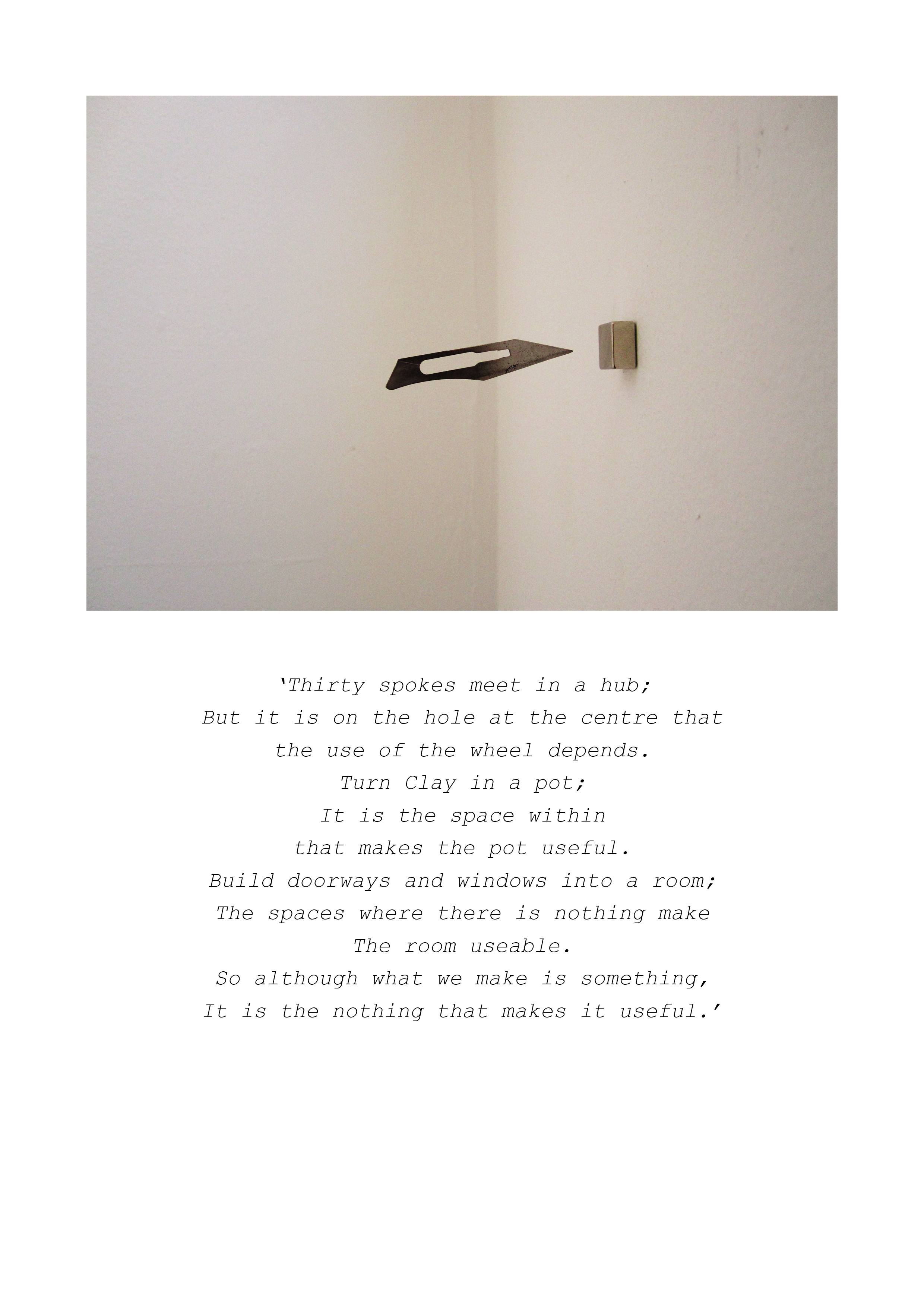
“The sculpture itself,consists of three elements; a magnet, blade and nylon thread. The blade is tethered back from the magnet by the thread and thus is only barely touching the magnetic field produced by the magnet.”
For me this image captures the invisible as much as the visible. There are forces at work beyond our visual perception and it is precisely what’s not there, what we are not told, which creates an intensity, a tension and a stillness.
The words of Lao Tzu remind us of those moments ‘when absence can be the most emphatic form of presence.’ [MINIMALISMS, Anatxu Zabalbeascoa, Javier Rodriguez Marcos : Gustavo Gili, Barcelona, 2000.]
In current culture which is suffering withdrawal from an excess and superfluity, where the tendency is to attribute value to tangible commodities, I find this image particularly poignant.
Perhaps we, as architects, thinkers and makers, might glean from this composition, less about what we might choose to do, and more about what we might choose not to.
Rowan Mackinnon-Pryde
ARCHIZINES Exhibition at the AA School

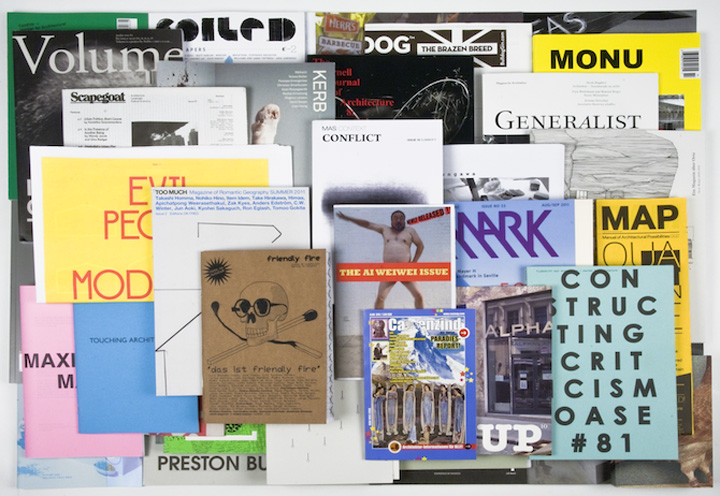
matzine joins 59 international architectural publications such as O.A.S.E; P.E.A.R; Volume; San Rocco; Candide; and Bracket in the current ARCHIZINES exhibition at the Architectural Association, London. Curated by independent curator and writer Elias Redstone, the exhibition is open until December 12th, and will go on to tour internationally later in the year.
ARCHIZINES features one issue of each publication and recorded interviews with editors on subjects which include the connections between architecture and independent publishing in a contemporary context.
Editors’ Choice ∙ Architecture as Time-Based Art ∙ Rion Willard
Second in the matzine Editors’ Choice series is Rion Willard’s ‘Architecture as Time Based Art’, from matzine 07 – The Hourglass Issue (ed. Seán McAlister).
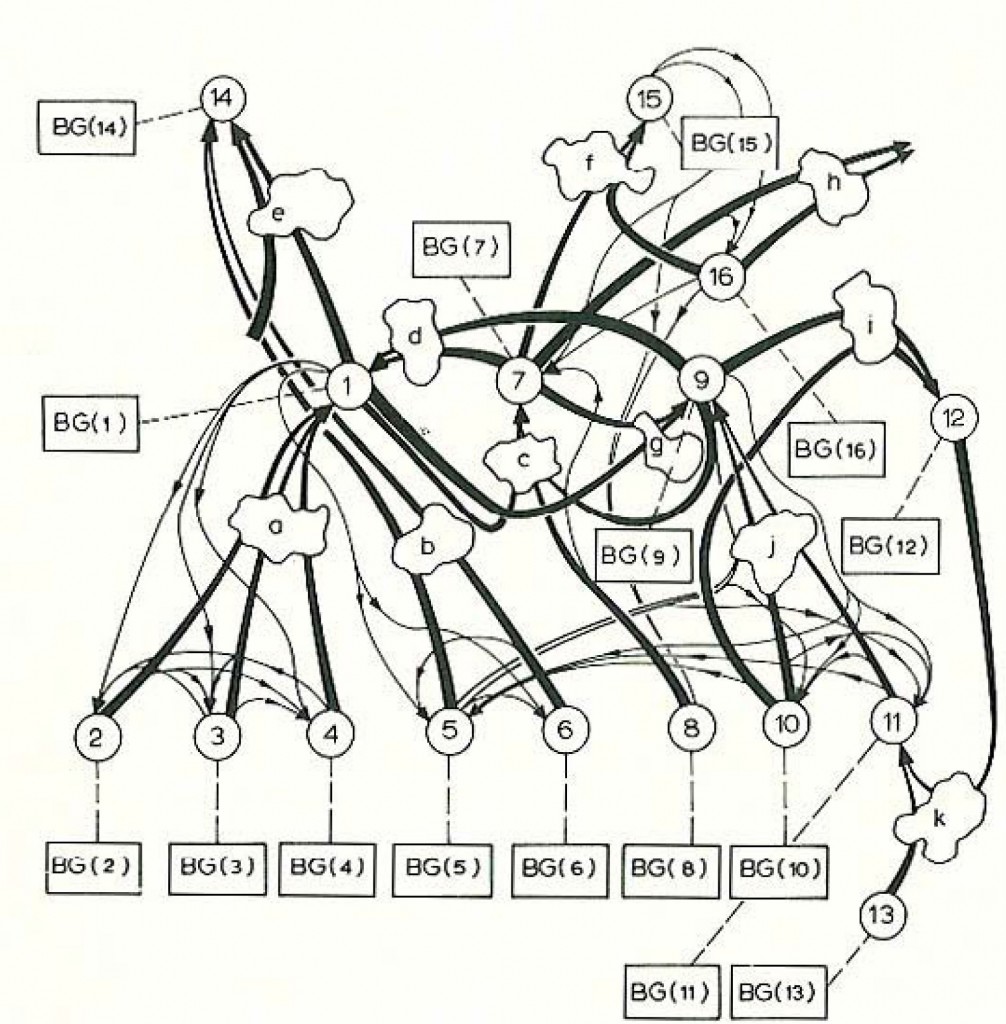
From ‘cartesian solidity’ to the ‘spatial geometry of dance’, this short essay considers the possibility of architecture as ‘perpetual performance’, and the ways in which scores for both music and dance could provoke for the architect alternative methods in the representation of space. Furthermore, the sentences employ a dimension often excluded from analysis of architecture – ‘time’. In referencing Pask’s Conversation Theory, the essay also encourages the reader to consider the nature of the dialogue which must exist to bring about architecture – the’conversation’ which defines and describes our position within our physical and cultural environments, locating us within a particular chronology, whether it is within a grand narrative or the extraordinary quotidian.
What form does this dialogue take, and can it be described graphically, in the form of notation? What other forms of discussion and inquiry might exist, and are drawings capable of hosting this exchange, without the support of text? Is producing a collaborative ‘little magazine’ in architecture one form of this dialogue, and are buildings another? “If architecture is anything at all”, proposed Douglas Darden, “it is a form of inquiry” – the words and images below illustrate that each can contribute to the dialogue of architecture in equal – and elegant – measure.
Ian Pollard
_______________________________________
Architecture as Time-Based Art ∙ Rion Willard
Paskian Feedback Loop Diagram
For me the delights of architectural education have always been the insights that reveal the fluid, dynamic, changing and cyclic nature of architecture. Let us consider architecture as a process and as a unique creative act that happens, not only as a part of the architect’s design methodologies but also as a cognitive act that is fundamental to our perception and subjective experience of space. In this light architecture can be seen as a time based art that exists in space like a continual piece of music or a perpetual performance.
When we start to see architecture not as inert spaces that we occupy but rather spaces created by our occupation, a complex reciprocal relationship between people and space, culture and architecture becomes apparent. Architecture can now be seen as a time based art that is inseparable from the way people perceive and use it. This cyclic relationship between human activity and architecture sees architecture as an event or series of events in time much like a performance complete with characters and protagonists both human and architectural.


 esmefieldhouse
 rowan
rowan ryanmcloughlin
 seán
seán stephen
 Ian Pollard
 matzine
leave a comment